

For Etica Funds, the Impact Report represents a fundamental tool to transparently report the impact of its investments in reference to the Sustainable Development Goals of the United Nations. By measuring and reporting these impacts transparently, we are able to give tangible shape to our vision, allowing us to pursue our mission and confirm our identity.
The impact generated by investments in the mutual funds managed by Etica Funds is based on two strategic levers: the selection of securities based on ESG criteria, implemented through the proprietary ESG methodology EticApproach®, and continuous stewardship. For over 25 years, thanks to our selection activity, the funds have invested in companies and countries that stand out for their commitment to environmental, social and governance issues. This selection process is further supported by stewardship with the corporate bodies of the companies in the portfolio, including activities such as consistent dialogue and the exercise of voting rights, aimed at promoting increasingly responsible practices.
The Impact report 2026: the main results
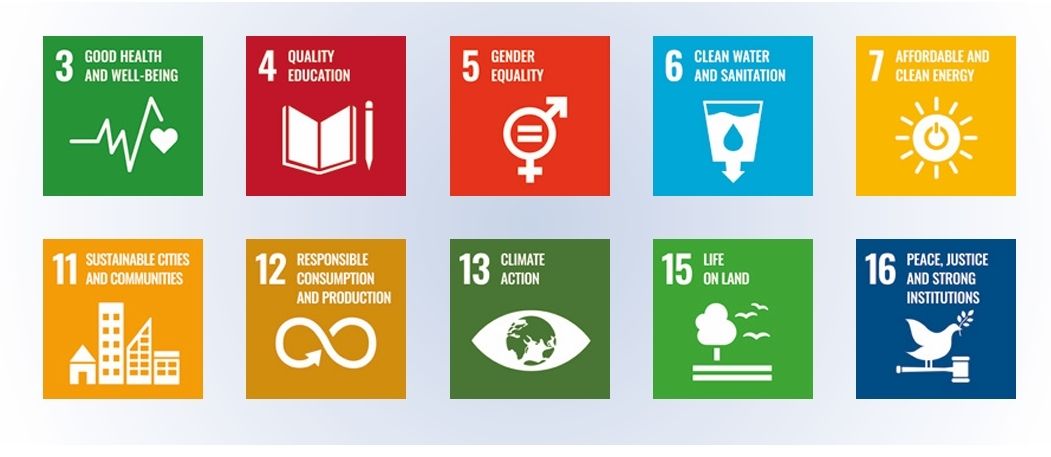
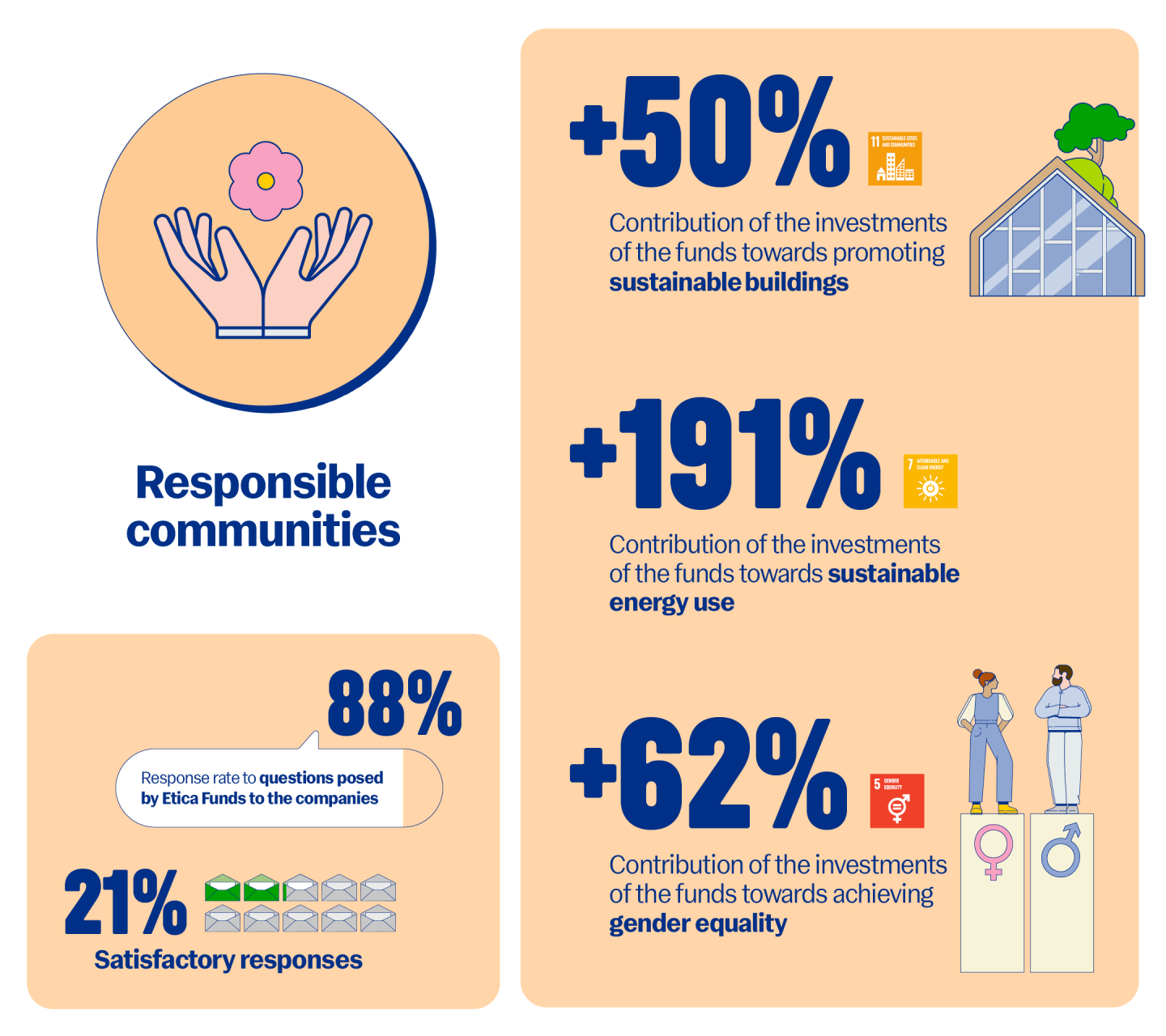
The impact assessment explores a number of specific long-term strategic environmental and social areas of impact, using the 17 Sustainable Development Goals (SDGs) as a reference for the selected1 impact indicators. This report focuses on the following Sustainable Development Goals:
The impact data refer to the reference market (MSCI World Universal Net Total Return as of 31/12/2025). For more information on the methodology, please refer to page 14 of the report.
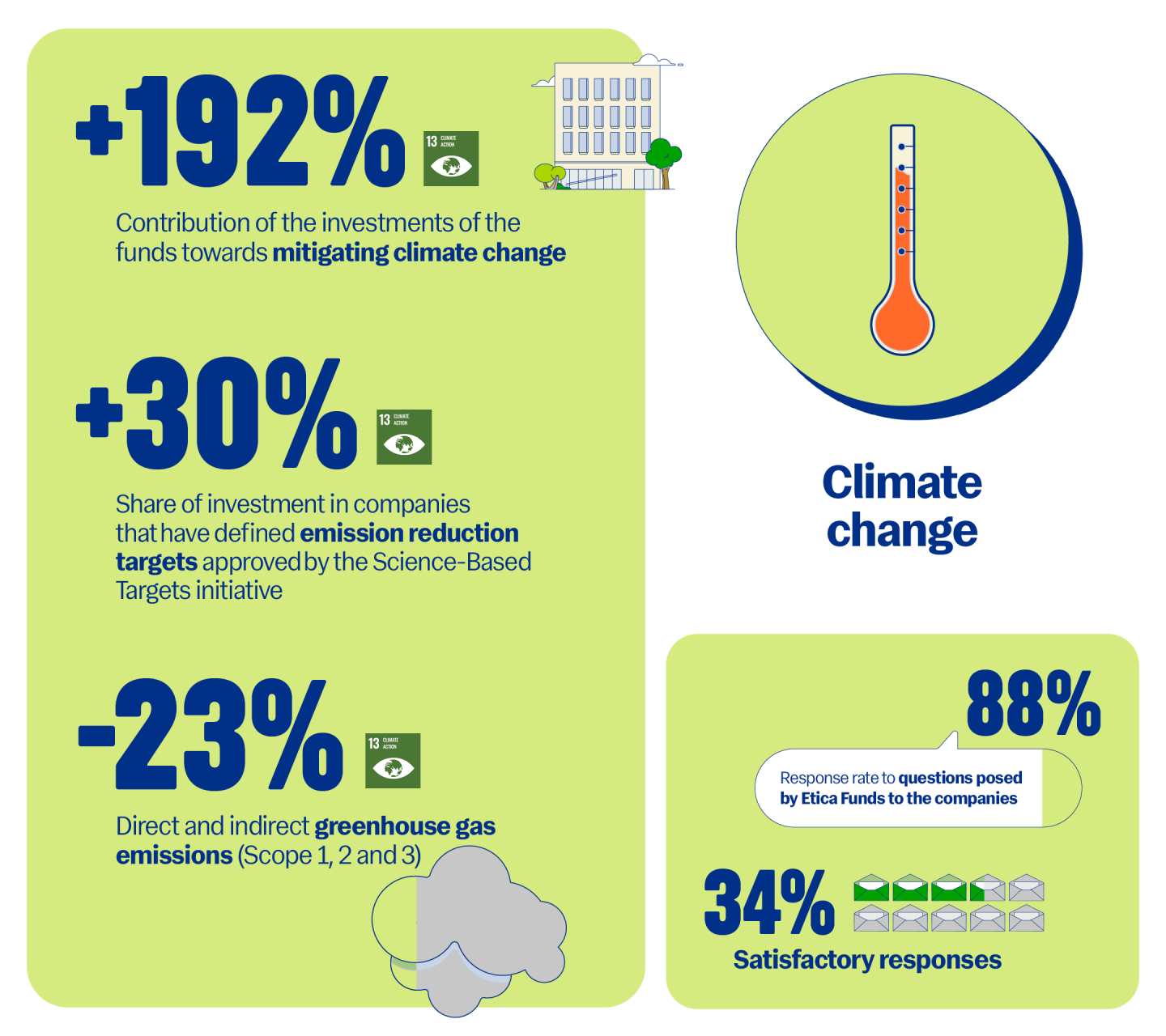
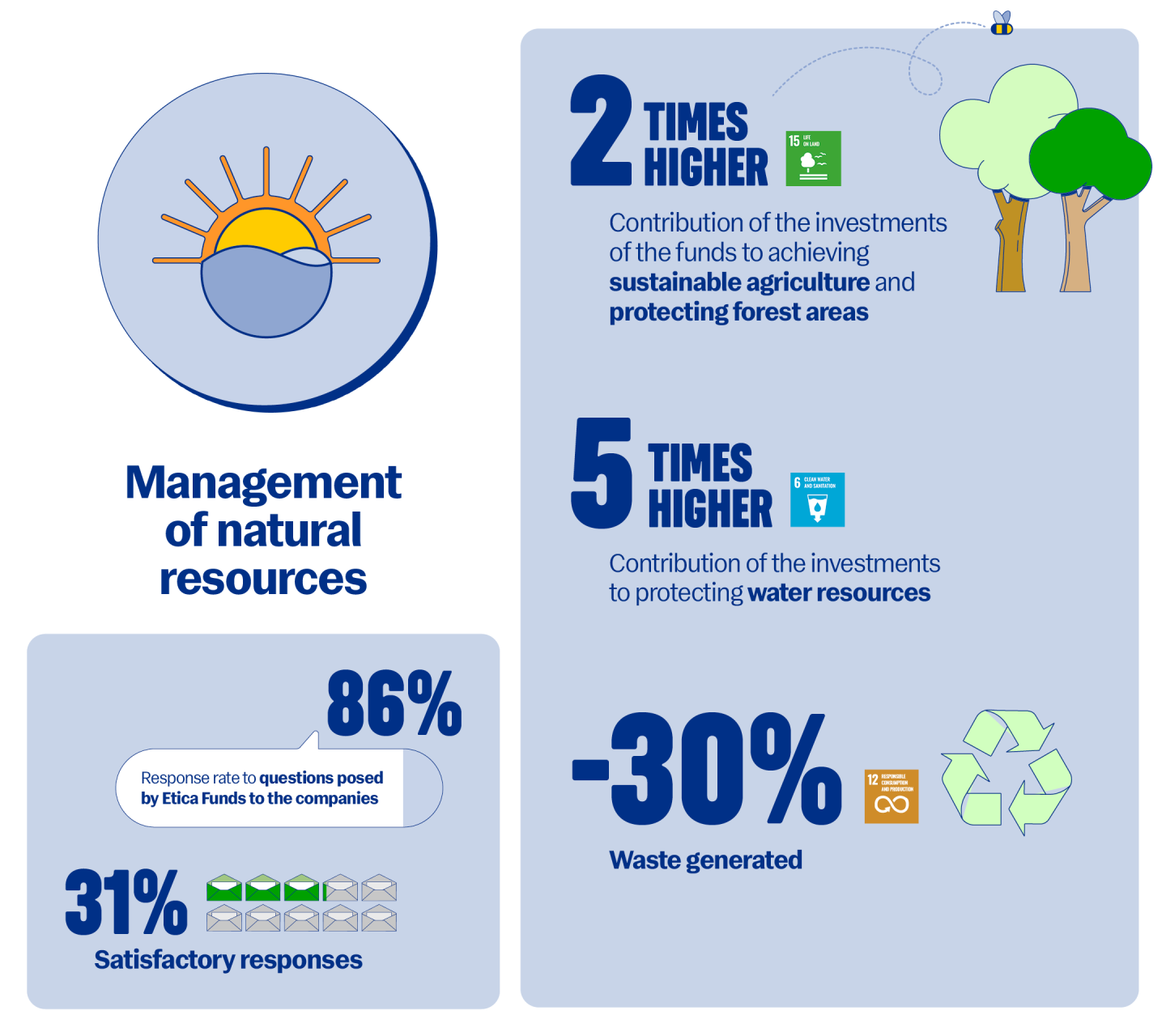
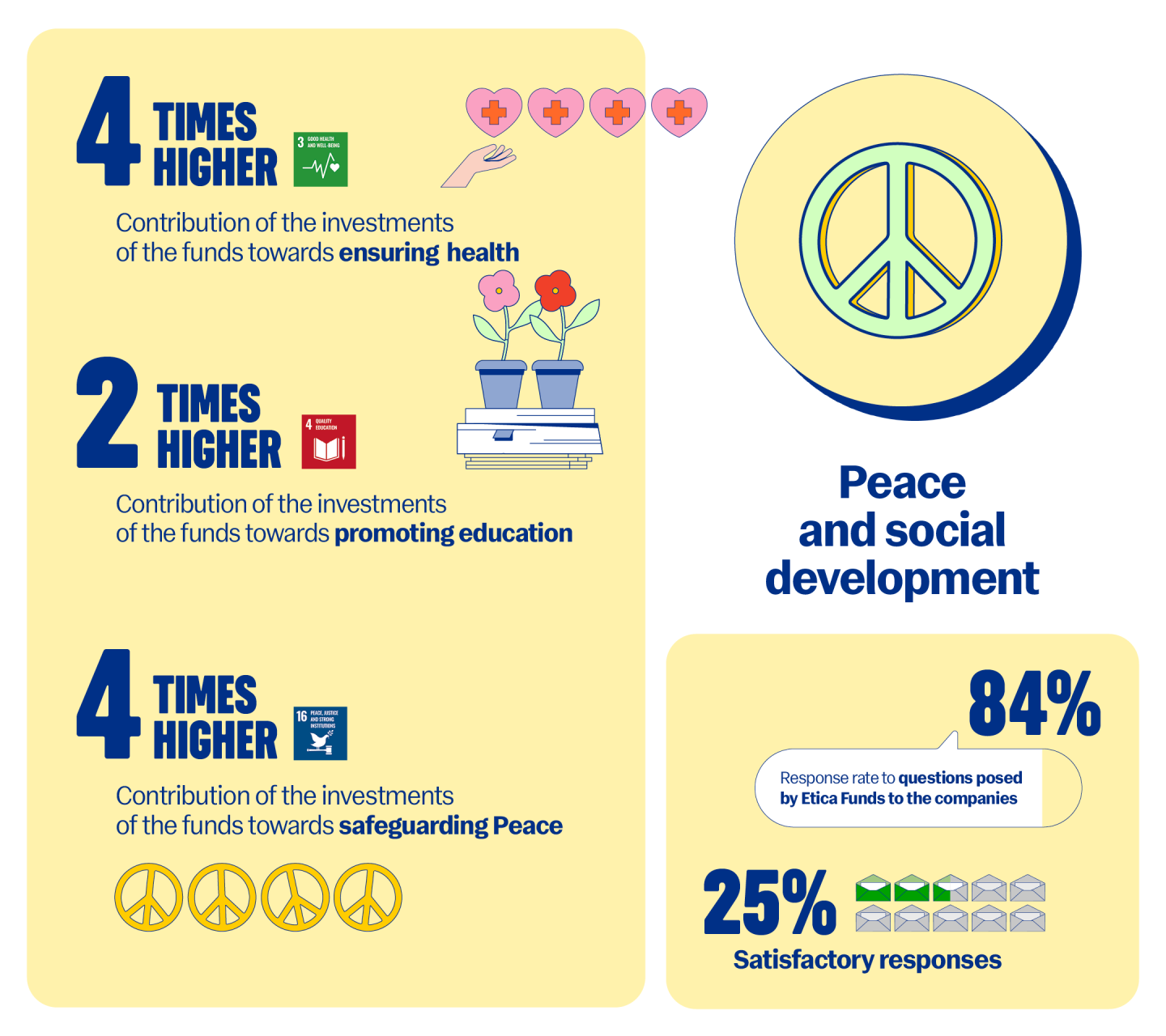
The thematic areas of impact covered in this report, corresponding to major environmental and social challenges for the planet and aligned with the United Nations Sustainable Development Goals (SDGs), are:
-
A company case study - Atlas Copco
Atlas Copco contributes to the industrial energy transition through high-efficiency technologies and digital solutions designed for the optimisation of consumption. In particular, AI-based centralised compressor room management systems make it possible to regulate loads and significantly reduce energy use, resulting in a substantial reduction in emissions over the life cycle of the solutions and a tangible contribution to the reduction of customers’ carbon footprint. The company focuses its efforts primarily on emissions along the value chain (more than 90% of the total), which are concentrated in the product-use phase, supporting customers in developing more efficient processes and in the reduction of indirect emissions (Scope 3).
This approach is supported by a structured climate strategy, which includes comprehensive emissions inventories, science-based targets (approximately –28% for Scope 3 by 2030), the integration of the carbon footprint into product development, and the use of tools such as internal carbon pricing to guide investment decisions.
The effects translate into a reduction in energy and emissions intensity in customers’ processes and an improvement in operational performance, contributing to the decarbonisation of the manufacturing and energy sectors and to the reduction of emissions and emissions intensity across the entire value chain.
-
A company case study - Kubota Corporation
Kubota Corporation is a Japanese group active in the production of agricultural machinery, industrial engines and solutions for the water sector, with a strategy focused on food, water and the environment. The sustainable management of water resources is one of the pillars of its long-term plan, which aims to promote the circulation of water resources and waste and improve the resilience of essential infrastructure. Kubota has developed systems capable of predicting the number of households that could be left without access to water in the event of emergencies or service disruptions, thereby supporting more effective water network management. At the same time, the company is benefiting from growing demand for the renewal of water supply infrastructure, with an increase in orders from local authorities for network upgrades. The company has also launched projects for the valorisation of agricultural biomass, testing the production of biofuels and fertilisers from rice straw as part of circular economy models.
Innovation is a central element of the company’s strategy. Investments in research and development reached JPY 111.9 billion, while the number of patents and new utility models rose to 2,536. In addition, the group exceeded its innovation targets, with a Patent Asset Index 22% higher than 2020 levels. Research and development activities also include digital solutions for water infrastructure management and the development of technologies for the more efficient use of natural resources.
At the operational level, the company has consolidated an environmental management system covering more than 90% of its activities and has continued to improve resource-use efficiency through specific targets for the reduction of water and energy consumption, the monitoring of water stress risks and programmes dedicated to the conservation of natural resources.
For investors, Kubota offers exposure to the growing need to upgrade water infrastructure and to technologies for more efficient resource management. Its positioning is supported by ongoing investment in innovation, advanced solutions for water treatment and distribution, and concrete initiatives aimed at strengthening the resilience and sustainability of water systems.
-
A company case study - Merck & Co.
Merck & Co. is a global pharmaceutical company engaged in the development, manufacturing, and commercialization of prescription medicines, biologic vaccines, and animal health solutions, with a focus on the prevention and treatment of major diseases. Nearly all of its revenue is generated by products directly related to treatment and prevention. Its activities include structured initiatives designed to expand access to medicines. These include differentiated pricing models for low- and middle-income countries, participation in the Medicines Patent Pool to support the production of generic versions, and the granting of voluntary licenses to local manufacturers in more than 29 countries, increasing the availability of treatments at more affordable prices. These efforts are complemented by patient support programs in the United States, which facilitate access to medicines for individuals without adequate healthcare coverage, as well as initiatives aimed at identifying and removing supply-chain barriers in underserved settings.
From an operational perspective, Merck combines these initiatives with high standards of quality and safety, including pharmacovigilance and anti-counterfeiting systems, while on the climate front it has established emissions-reduction targets aligned with the Paris Agreement. Progressive improvements have been recorded in this area: Scope 1 and 2 emissions intensity decreased from approximately 19.4 tCO₂e per million dollars of revenue in 2021 to 13.8 tCO₂e per million dollars in 2024, while energy intensity declined from approximately 345 to 264 GJ per million dollars over the same period.
The results highlight a direct contribution to the development of innovative therapies and treatment safety, together with concrete initiatives aimed at promoting their accessibility and distribution, thereby contributing to the structural improvement of access, quality, and sustainability of healthcare systems worldwide.
-
A company case study - GE Vernova
GE Vernova has developed a distinctive position as an enabler of the global energy transition through an integrated portfolio of technologies covering the entire electricity value chain, from generation to transmission and energy management. The group supplies key components for the generation of energy from renewable sources—including wind, solar, and hydropower—as well as advanced grid solutions, such as HVDC systems and transformers, which support the integration and stabilization of increasing shares of intermittent energy and enable the efficient transmission of electricity over long distances. Approximately 38–40% of revenue is linked to these technologies, highlighting significant exposure to the expansion of clean energy and broader access to more sustainable energy systems. A concrete example is represented by AI-based grid automation systems, which enable the real-time balancing of electricity flows and improve infrastructure resilience and reliability. At the same time, the company develops solutions for energy storage and conversion, alongside flexible, lower-carbon generation technologies that ensure continuity of supply even when variable renewable energy sources are used.
The impact of these solutions is significant: in 2024, GE Vernova contributed to bringing approximately 31 GW of new generation capacity into operation and enabled 71 GW of grid capacity, with a substantial share in emerging economies. This contributed both to the growth in energy availability and to the expansion of access in underserved areas. The installed technologies also have a carbon intensity approximately 20% lower than the average of the existing grid and helped avoid approximately 27 million tonnes of CO₂ during their first year of operation, thereby strengthening the contribution to the expansion of reliable, accessible, and lower-impact energy.
This document constitutes a marketing communication prepared by Etica Sgr S.p.A. (“Etica”).
The economic and financial data, as well as the numerical and percentage figures or aggregate data referred to in the material contained in this communication, reflect market conditions and the information available at the time it was prepared and may therefore change as a result of developments in financial markets or changes in the information available. Etica is under no obligation to amend, supplement and/or update the data contained in this material.
Any information contained herein concerning past performance, forecasts or assumptions regarding future prospects should not be regarded as indicative of future performance. Likewise, any opinion, strategy or assessment contained herein, or that may be inferred from it, is provided solely for illustrative purposes and may not be interpreted as a solicitation, an investment recommendation or investment advice.
This communication does not take into account the individual circumstances of any person who may receive it, including the applicable tax regime, investment objectives, knowledge and experience in investment matters, risk tolerance and financial situation.
Investments in funds are subject to risks related to the underlying assets, which may affect the value of the relevant units. Etica Sgr provides no guarantee of returns and does not guarantee the repayment of the invested capital.
Etica makes no representation or warranty, and accepts no liability, as to the achievability, suitability, reasonableness or reliability of any forecast or assessment contained in, or inferred from, the material presented herein.
Investors should enter into an investment transaction only after fully understanding its overall characteristics and the degree of exposure to the related risks, through careful review of the KID and the prospectus of each fund. These documents, together with information on sustainability-related matters pursuant to Regulation (EU) 2019/2088, are available at www.eticasgr.com/documenti and from the fund distributors listed at www.eticasgr.com/clienti-privati/dove-sottoscrivere on the website www.eticasgr.com.
The recipients of this material assume full and absolute responsibility for the use of the information contained in this communication and for any investment decisions made on the basis thereof. The use of such information in support of investment decisions is not permitted and is entirely at the investor’s own risk. Accordingly, Etica disclaims all liability for any losses arising from the use of the information contained in this marketing communication.